
Japan: The Art of Travel
From a Kyoto forest retreat to world-class galleries in Naoshima, this trip through Japan seamlessly blends urban inspiration and rural serenity
By Bennett DiDonna
For most of my life, the perfect vacation has been a balance of city and countryside. It’s a combination, which at its best leaves you feeling relaxed and restored, while at the same time inspired by a new culture and unfamiliar landscapes. Until a recent trip to Japan, I always thought this meant separate destinations: You fly into the capital city and spend a few days roaming around museums and restaurants before heading to an empty beach for a bit of proper R&R. But in the serene foothills of Kyoto and the art-filled island of Naoshima, I was amazed to visit two destinations that left me feeling both rejuvenated and invigorated, opening my eyes to a new type of travel that transcends the city and countryside divide.
After arriving at the central train station in Kyoto, I hop in a car and begin the half-hour ride past high rises and homes, temples and shrines, winding my way up into the tranquil green hills that surround the city. Pulling up to the front gates of Aman—a Swiss-based hospitality group, which operates 36 exquisite properties around the globe—you can’t help but feel transported to another world. Nestled within a 32 hectare forest, the hotel previously served as the private garden and family retreat for a prominent local Kimono manufacturer. Today the property features 26 rooms, suites, and pavilions along with restaurants, an onsen (a traditional Japanese hot spring bath), as well as a tea house, which will open in 2026.
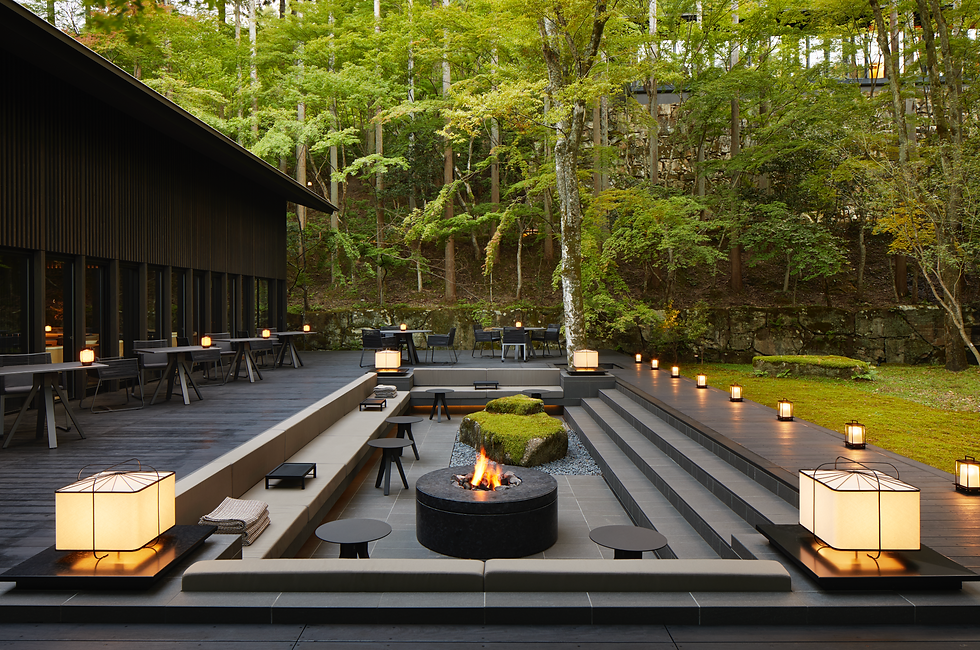
I begin my stay with a tour of the grounds, exploring the moss covered stone paths, and a maze of private trails. The forest comes together to form a lush canopy overhead and the smell of hinoki cedar trees wafts through the air. I eventually make my way to my room, which beautifully incorporates chic minimalist architecture with traditional Japanese design. Opening the curtains, I’m blown away to find a wall of floor-to-ceiling windows, which look out on the forest and give you the impression of being in a floating treehouse. I am a fan of forest bathing, but to be able to do it from a perfectly made bed is hard to top. That is, until I notice the sliding doors above the headboard, which open to the bathroom; meaning that you can forest bathe while literally bathing in the room’s massive wooden soaking tub.
Over aperitivo at The Living Pavilion, one of Aman Kyoto’s two restaurants, which fuses Kyoto-style cuisine and western dishes, I learn that it was actually the forest and property that inspired the hotel rather than the other way around. After a Japanese plum negroni, I head to my room and enjoy the sunset through the trees before making my way back to the Living Pavilion for dinner. Paired with a delightful crisp sake, I enjoy a delicious uni donbouri, a rice bowl with fresh sea urchin, and roast chicken. I cap off the night with a moonlight walk, enjoying the gentle breeze as I head back to my room.
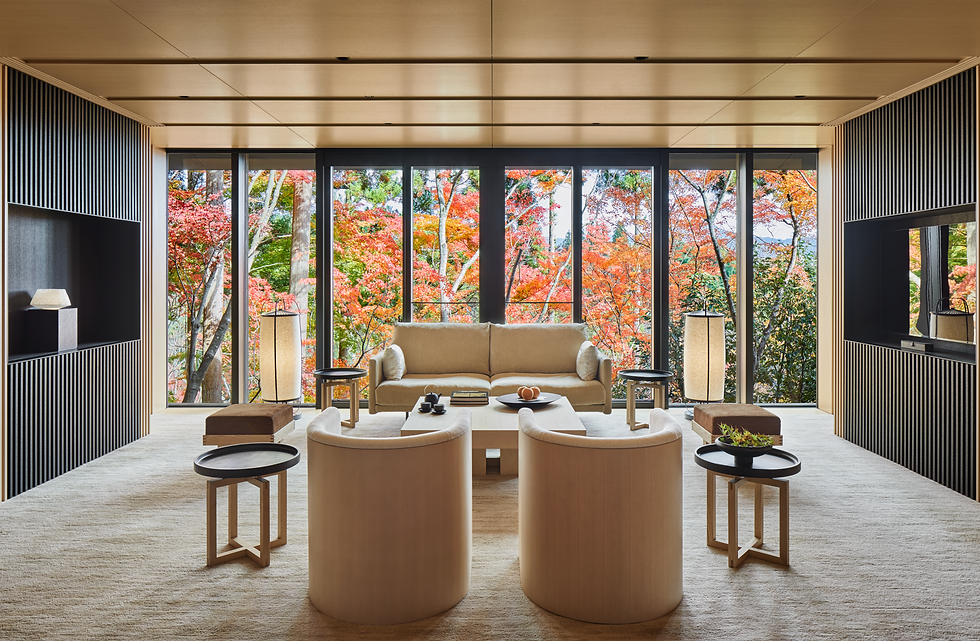
The following morning I raise the blackout curtains from my bedside, and greet the day as the light beams in. I sit outside and enjoy Aman’s exacting take on a traditional Japanese breakfast. Tuna, mackerel, pickles, omelette, wagyu, and a bit more uni, because why not. After visiting the onsen for a soak in the indoor and outdoor mineral hot spring, I’m feeling absolutely blissed out. Keeping the gourmand ball rolling, I head to Taka-An, Aman Kyoto’s Omakese, for a crash course in preparing cut rolls, one of several thoughtfully designed on-site activities that the hotel offers. While I don’t think I’ll be filling in behind the sushi bar anytime soon, it was a remarkable experience to see the chef’s craft and artistry up close.

Nourished and ready to explore the city beyond the property, I make the short trip to the Golden Pavilion, an 14th century zen temple, and then a short car ride to the Kyoto Goyen National Garden. By the time the sun begins to set I am feeling overwhelmed by the city’s history and immense beauty, as well as by the crowds of selfie-taking tourists, which feel inescapable. I eventually make my way to dooop, a locals only design-forward izakaya and listening bar for a glass of craft sake and delicious bites. In the car back to the hills, I can’t help but feel incredibly fortunate for the tranquil vantage point I was able to experience the city through.
The next day, after a short train ride to Osaka, and a pit stop at Expo 2025, this year’s iteration of the World’s Fair, I begin the beautiful ride to Naoshima. I head from the bullet train in Okayama to the port of Uno, and finally a ferry to the island, which with a population of just over 3,000, has become a top destination for the art world cognoscenti. Stepping off the boat, I am met by a shuttle from the Benesse House Museum, where I will be staying for the evening. Soon we are cruising through green hills and past the sandy beaches of the island, as we make our way to the Benesse Art Site Naoshima, home to an astounding array of Tado-Ando designed museums, hotels, and restaurants.
I stretch my legs and go for a walk along the beach before visiting the Lee Ufan Museum, with work from the South Korean painter and sculptor. From there I check out the minimalist Hiroshi Sugimoto Gallery, capped off with a mochi and tea service. After a beautifully tranquil pause, I head to the Chichu Art Museum, perhaps the best known museum on the island, which features works from Claude Monet alongside installations by James Turrell and Walter De Maria. Like many of the museums on the island, Japanese architect Tado Ando incorporates striking brutalist concrete structures that play with the elements, and are works of art in their own right. While it is possible to walk between several of the museums and installations in good weather, the hotel also offers a private shuttle between the locations.

Arriving back at the Benesse House Museum, I check-in to my room. I opt to wait on visiting the gallery though, as one of the magical draws of this hybrid museum and hotel is that after it closes to the public at 9:00 p.m., guests have the chance to visit the collection into the wee hours of the night. In what feels like an alternate reality, the front desk hands me my key and informs me that the only way to access the Oval, a breathtaking hilltop annex of six guest suites, is via a private monorail. I ride up the mountain in a small six person carriage, in awe of the sweeping sea views and greenery. After settling into my room, I walk around the reflecting pool in the center of the building and head upstairs to the roof garden to watch the sunset.
Ready for dinner, I hop back on the monorail and make my way to one of the Benesse’s two restaurants, both of which are tucked away in the museums, and spring to life once the sun goes down. After a nourishing plate of grilled fish and beautiful views of the water, I wander back to the Benesse House Museum for a bit of after dinner art. At this point it's half past ten, and I find myself standing in front of a Basquiat painting, taking in the work that draws on images of traffic, buildings, and crowded streets. I look around, alone in the gallery on a remote island in Japan, and can’t help but wonder if I’ve found the exact spot where city and countryside meet.


xd