
The Sunny Side of Seattle
In late summer, the city offers something closer to a coastal escape than an urban getaway.
By Maddy Sims
Seattle, in my mind, was always gray.
The first time I visited, it delivered on that expectation—misty skies, damp sidewalks, and a steady drizzle. We did what visitors do: wandered through Pike Place, watched fish fly, and ducked into bars to escape the rain. It was an excellent trip. It was exactly the trip I anticipated. This time, though, is different.
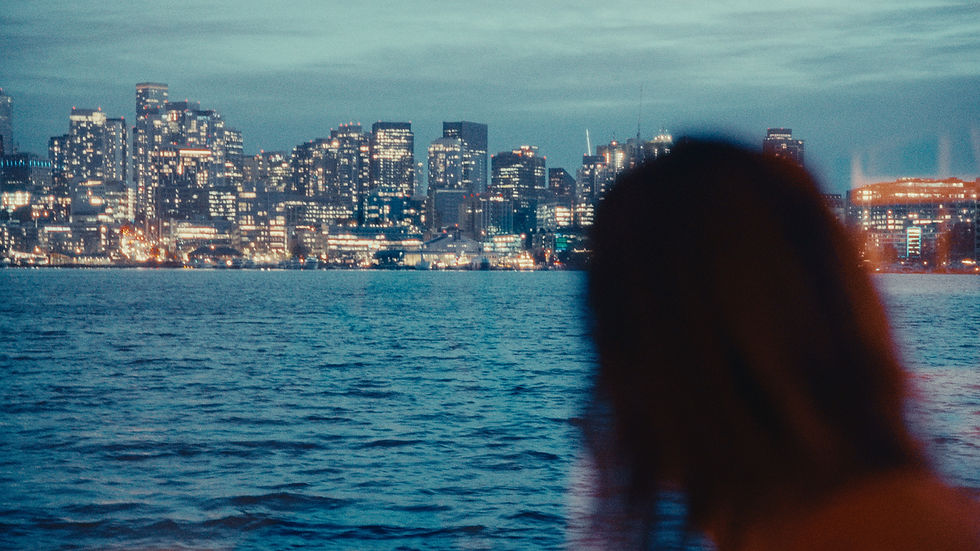
I’m leaning over the edge of a ferry, a cold cider in hand, watching deep navy water sparkle in the sun. The engine idles. We’re scanning the horizon for whales, with the Olympic Mountains rising in the distance. It’s hot enough to feel like late summer somewhere coastal or somewhere Mediterranean—somewhere decidedly not here.
But it’s Seattle in September, and it’s perfect. (Locals, I learn quickly, prefer not to advertise that.) It’s the city’s best-kept secret.
I land at sunset, the blazing orange sun dropping behind dark silhouettes of pine and mountain. In South Lake Union, the newly opened 1 Hotel feels less like a city property than an extension of the surrounding landscape—with reclaimed wood, moss installations, and soft, textural fabrics that echo forest floors and lake edges. It’s calm without trying too hard, a quiet retreat in the middle of the urban bustle.

The next morning, we leave it behind. Most visitors point themselves toward Mount Rainier, and for good reason. But the deeper magic lies elsewhere, in lesser-known stretches of forest where the air feels greener, more still and also somehow more alive. After a long drive out of the city, we arrive at a dense expanse of towering pines, sunlight streaming through in long, golden beams. For a moment, it doesn’t look real.
We’re here to forage with Angela Shen, founder of Forage Seattle, who moves through the woods with the kind of ease that comes from knowing exactly where you are and why. Her enthusiasm is immediate and infectious. She points out textures, scents, and subtle shifts in the forest floor that would otherwise go unnoticed.
Soon, we’re spotting mushrooms everywhere: chanterelles tucked beneath ferns and coral-colored lobster mushrooms hiding in the soil. The act itself is slow and deliberate—part treasure hunt, part meditation. We kneel, brush away dirt, and take care not to disturb what’s around it. It requires presence and attention. In a world built on speed and distraction, that alone feels like a luxury.
Back at camp, Shen turns our haul into a rich savory risotto, each bite layered with the umami of what we’d just gathered. It’s simple, but it tastes differently when you’ve pulled the ingredients from the ground yourself. Dessert—her family’s dense, fudgy brownies—is a welcome reward.
We drive back to the city. Forest turns to freeway. Green gives way to glass. But the 1 Hotel feels like a piece of the forest has followed us back.

That night, in Capitol Hill, dinner at Terra Plata continues the theme, though with a bit more polish. The rooftop hums softly under a canopy of plants, the menu rooted in the same philosophy we’d just experienced firsthand: seasonal, local, and intentional. A spread of roasted beets, albacore crudo bright with citrus, and a perfectly-cooked chicken arrives in waves, each dish clean and precise without feeling too precious. Seattle knows exactly what it has access to and lets those ingredients shine.
In the morning, the waterfront is glowing. Seattle’s newly revitalized shoreline stretches along Puget Sound, dotted with public art, green spaces, and nearly a thousand newly planted trees. It’s thoughtfully designed, but more importantly, it’s usable—made for wandering, pausing, and playing.
At the Seattle Aquarium’s Ocean Pavilion, things go quiet. Early light filters through the water-filled spaces as families drift between exhibits. In one massive tank, a school of fish moves in near-perfect unison—except for one, swimming steadily against the current. It’s a small moment, easy to miss. I can’t look away.

From there, we walk to the ferry terminal and board for Bainbridge Island. The crossing is short (about 30 minutes) yet feels like a complete departure from the city. The skyline recedes, replaced by a dense green shoreline and open sky. Bainbridge is unassuming in the best way: independent shops, low-slung buildings, and people walking everywhere. At Café Hitchcock, that same culinary ethos shows up again in a bowl layered with grains and vegetables. It’s food that feels grounding and restorative. Here, wellness is simply an aftereffect of how people live.
Back in Seattle, we head to Aerlume for dinner, perched above the water with sweeping views of the Sound. Plates of king salmon and black cod arrive as the sky shifts from gold to pink to deep blue, the light stretching longer than expected. This city is not at all what I had in mind.
The next morning begins with fog. Out in West Seattle, Elliott Bay is calm and quiet as we push off in kayaks, paddling toward open water. The skyline stands behind us, softened by the haze. Out on the Sound, the city feels distant, secondary to the water and the wilderness.
We pause along the shoreline to explore tide pools, small ecosystems teeming with life just beneath the surface. There is so much that exists here, just slightly out of view. I crouch at the edge of the pools, tracing the small movements of marine life just beneath the surface.

Later, on Alki Beach, we enjoy Hawaiian-Korean food at Marination. I get a plate, which has tofu covered in sticky-sweet barbecue sauce, signature slaw, mac salad, white rice, and a fluffy Hawaiian roll. After the 6 mile kayak loop, it’s exactly what I need.
By afternoon, the fog lifts. On Lake Union, I board a Wild Haus floating sauna. Inside, heat builds slowly, eucalyptus steam rising as water hits hot stones. Through wide windows, we take in the striking geometry of the city against the sky.
After ten minutes, I step out, climb to the top level and jump off the ledge. The cold is electric. For a moment, everything sharpens. Then it settles into something else entirely: a quiet calm I haven’t felt in ages. We repeat the cycle—heat, cold, stillness—until the sun dips low behind the city.

For our final night we move to a bucket-list property: the iconic Edgewater Hotel, a place known for hosting rock royalty and A-list celebrities since opening in 1962 for the World’s Fair. Notable guests include Elvis Presley, The Rolling Stones, Bob Marley, and Joni Mitchell. The Beatles, who came in 1964, famously fished from their windows. The Dalai Lama even stayed at this historic hotel.
And after checking in, it’s immediately clear why. It’s the only waterfront hotel in the city, situated directly on Puget Sound. The property has all the charm of a Pacific Northwest cabin. It’s perfectly cozy and feels refreshingly nostalgic—an old-school vibe with modern upgrades.
Dinner downstairs at Six Seven follows suit. We enjoy local seafood, simply but carefully prepared. It’s the kind of meal that doesn’t need embellishment. Mussels, scallops, and mushrooms are all served with rich sauces made to enhance rather than obscure. The city lights flicker on the water.

By morning, it’s quiet again. From a table by the window, I watch the early sun scatter across the surface of the Sound. A sea lion surfaces briefly, then disappears. Coffee steams in the cool air. It would be easy to call this sunny sojourn a surprise, to frame Seattle in September as an exception, a lucky break in a city known for its clouds.
But that undersells it. What I found here wasn’t just good weather, but a different version of the city entirely: one rooted in water, forests, and mountains, in food pulled from the ground and the sea. A place where wellness isn’t a trend, but a byproduct of proximity to and respect for nature. The gray still exists. It’s part of the story. But so is this.
WHAT TO PACK

Doen Henri Top 
Freda Salvador Flats Doen Diana Jeans 
SAME Mini Dress


Comments